


Exoskeleton Report interviews Dephy’s co-founder about powered ankle assistance, the Sidekick, the consumer exoskeleton market, research, and trust.
Consumer exoskeletons are moving beyond research settings and into everyday life. While many wearable systems focus on the hips or knees, Dephy’s Sidekick provides powered assistance at the ankle. Exoskeleton Report sent a series of written questions to Luke Mooney, PhD, CEO and co-founder of Dephy, exploring where the technology came from, how the company approaches safety, and what customers can expect.
Mooney’s responses were supplied through Dephy’s public relations representative and are presented in the original order below.
About the Interviewee and Dephy
 Who Is Luke Mooney?

Luke Mooney, PhD, is Dephy’s CEO and co-founder. He earned bachelor’s, master’s, and doctoral degrees in mechanical engineering at the Massachusetts Institute of Technology (MIT). His research in the Biomechatronics Group under Hugh Herr helped lay the foundation for Dephy, which Mooney and Herr later co-founded. His LinkedIn and Dephy’s official website list his credentials and position.
What Is Dephy?
 Dephy is a Massachusetts-based wearable robotics company focused on powered assistance for human movement. Before the Sidekick, Dephy developed the ExoBoot, a powered ankle exoskeleton explored by the U.S. Army to assist soldiers during load carriage and other physically demanding walking tasks. The company also received U.S. Air Force Small Business Innovation Research (SBIR) funding to further develop and evaluate ExoBoot technology for military applications.
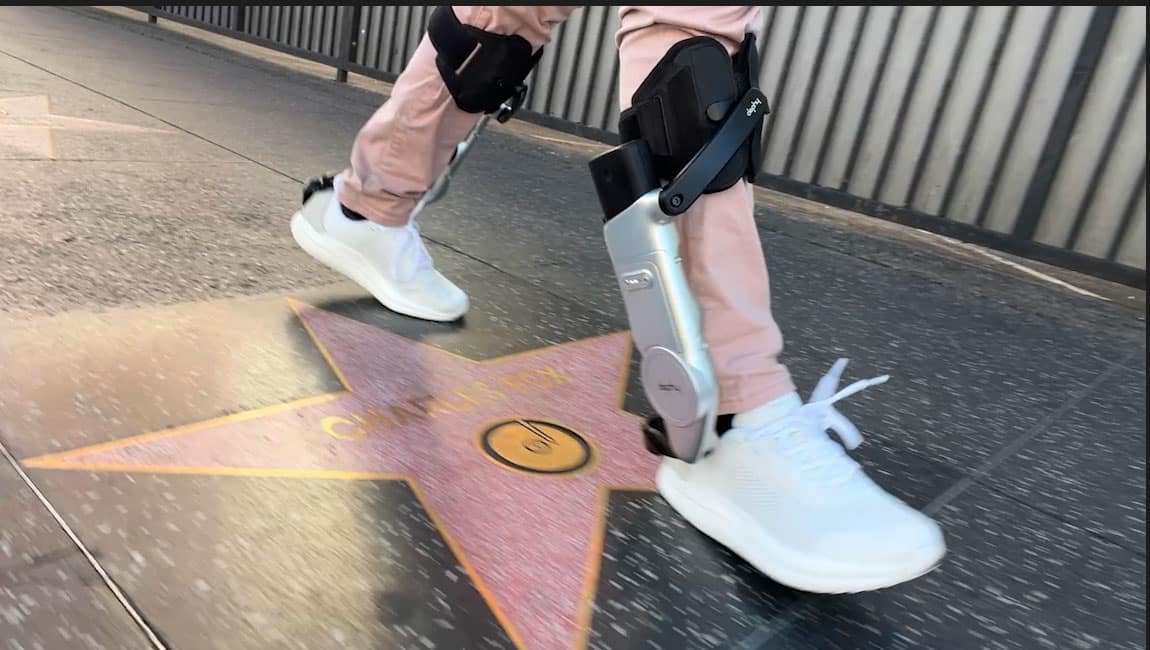
Its Sidekick uses powered ankle assistance with compatible footwear to help a person during the push-off phase of walking. Dephy markets the Sidekick as a consumer wellness product, not a medical device, intended for people who can already walk independently. The company is also a robotics partner for Nike’s Project Amplify.
Dephy’s Mission and the Sidekick’s Intended Users
Who is the Dephy Sidekick for?
The Sidekick is for people who love to move and want to keep doing it. That might be a daily walk, a weekend hike, a day on your feet at work, or exploring a new city on vacation. Many of our customers have noticed that walking takes more out of them than it used to, or that they’re more sore or tired at the end of the day. The Sidekick gives them a boost with every step, so they can go farther and feel better doing it.
Because it’s a wellness product, not a medical device, it’s designed for people who are already walking on their own. It’s for the person who’s still moving and wants to keep it that way.
What is Dephy hoping to achieve? How is Dephy trying to change the world?
We want to change what people expect from their bodies as they age, and from mobility support in general. Right now the options are to push through it or sit it out. We think there’s a third option: a wearable that gives you real, powered assistance and still looks and feels like something you’d choose to wear, not something you’re resigned to using.
And it’s about more than movement. When people start sitting things out, they lose touch with their communities and the everyday moments that bring joy into their lives. We want to help people stay confident, independent, and part of it all.
Long term, we believe powered wearables will be as normal as e-bikes, and that no one should have to give up the things they love because walking got harder.
From MIT Research to Consumer Ankle Exoskeletons
Where does the technology originate from?
The Sidekick grew out of my PhD research in Hugh Herr’s Biomechatronics Group at the MIT Media Lab. Hugh and I went on to co-found Dephy together.
At MIT, we were building robotic knee and ankle prostheses for people who had lost part of a leg. Powered wearables are a uniquely challenging mix of robotics, biomechanics, ergonomics, and fashion. As we worked through those problems, we started wondering whether the same technology could help people who still had their limbs.
The prosthetics work had given us a deep appreciation for the ankle. It does over 50% of the work of propelling you forward when you walk, which makes it the most effective place to add assistance for everyday movement. We’d seen how profoundly restoring that joint could help people, and we believed augmenting it could too. It’s also the hardest joint to power well, which is the problem my research focused on and what Dephy has spent the better part of a decade solving. Through more than 40 hardware iterations leading up to the Sidekick, we’ve brought this technology out of the lab and into real life.
Is the Dephy Sidekick a consumer exoskeleton? Where do you see the future of the Sidekick and other similar wearable devices for the hip and knees (Hypershell, DNSYS, WIRobotics, VIGX, etc.,)
Yes. The Sidekick is a consumer exoskeleton. It’s a wellness product, not a medical device, so it isn’t prescribed by a clinician or covered by insurance. People buy it directly from our website and use it in their everyday lives.
I don’t think the category will necessarily have many winners. The successful powered wearables, whatever joint they target, will share a few traits. They’ll deliver a meaningful benefit without getting in the way. They’ll be safe and comfortable. And they’ll be easy to live with in every practical sense: putting it on, using it, taking it off, cleaning it. It can’t require a PhD to don and doff.
Early adopters will embrace the technology and celebrate the capabilities it enables or restores. Broader adoption will follow as devices get smaller and sleeker. Long term, I think wearables like the Sidekick will become as normal as e-bikes: something people choose because it lets them do more of what they love.
Technology, Trust, and Safety
Would you say that in the past the big question was the technology, but now the technology is proven to work and the new frontier is trust? If so, why should someone trust Dephy’s products?
Yes. The core technology behind powered ankle assistance is proven. The question now is whether people will trust something powered, worn on their body, deciding when to give them a boost. Trust is critical, and we’re building it in four ways.
First, the engineering. The Sidekick is built on more than a decade of MIT research, and we chose to pursue real third-party safety certification through TÜV Rheinland to ISO 13482.
Second, honesty. There’s a lot of hype in this category: marketing that shows extreme use cases or talks about potential rather than what a consumer will actually experience. We try to be clear about both performance and limitations. When we cite a spec like battery life, we use a simple number under realistic conditions, not a combination of settings chosen to produce the biggest figure. We think we owe that to this emerging category. If people feel oversold, skepticism will slow adoption for everyone.
Third, accessibility. We have a public phone number on our website, and anyone can call and talk to a real Dephyer in Massachusetts. We love those conversations.
Fourth, time to decide. Our 30-day return policy gives people a real chance to see how the Sidekick fits into their life before committing.
Government Funding, Research Validation, and Nike
What role, if any, have government grants or research contracts played in Dephy’s development or the underlying MIT research? Which programs supported the work, and what did that funding help you accomplish?
Government funding supported most of Dephy’s first decade of research and development. We’re grateful to the programs and teams that backed this work, including the U.S. Army Combat Capabilities Development Command (DEVCOM) Soldier Center, the Department of the Air Force’s AFWERX program, the Small Business Innovation Research (SBIR) program, and the Department of Defense Orthotics and Prosthetics Outcomes Research Program (OPORP).
That funding supported the early development and testing of the technology. Building devices for use in the field meant reliability and ergonomics mattered from the very beginning, and that work on both the hardware and software directly shaped the Sidekick you see today.
At the time, we were focused on performance: helping warfighters carry loads safely and effectively. Looking back, we should have listened more closely to early users of the ExoBoot, as it was called then, who told us it was relieving discomfort throughout their bodies, not just boosting performance. That taught us to always listen to the user. The data may show one thing, but the user’s experience is their reality, and it’s often more right than the data. That insight is a big part of what the Sidekick has become.
We look forward to continuing to work with these programs as the technology matures, helping service members operate effectively and safely and recover from injury.
What testing, technical milestones, or outside review did past powered ankle projects or the Dephy Sidekick require?
The Sidekick builds on more than a decade of testing, starting with our research at MIT and continuing through our work with the U.S. military, where devices had to hold up in demanding field conditions. Along the way, we went through more than 40 hardware iterations before arriving at the Sidekick.
We’ve also partnered with more than 25 academic institutions, and our devices have been studied independently by researchers in academia and government. That work has been published in peer-reviewed journals and has helped validate how the technology affects the way people walk, from muscle activity to gait under fatigue.
For the Sidekick itself, we chose to pursue independent safety certification. Each of the system’s three main components has been tested and certified by TÜV Rheinland to international safety standards:
- The Sidekick system is certified to ISO 13482:2014 and UL 3120:2023, safety standards for personal care robots.
- The battery is certified to applicable UL and IEC 62133-2 standards for rechargeable battery safety.
- The charger is certified to applicable UL and IEC 62368-1 standards for electrical safety.
For our customers, that means outside experts, not just us, have verified that the Sidekick is safe and that the technology behind it works.
Nike identifies Dephy as its robotics partner for Project Amplify. How did that relationship develop, and what lessons from that collaboration have carried into Sidekick?
Nike identified Dephy as their robotics partner for Project Amplify because we’d already put a decade into powered ankle actuation and movement. With the best athletic brand in the world investing in the ankle and powered movement, we are excited about the momentum we can create for the category.
How Sidekick Works and Who Should Consider It
Someone trying powered footwear for the first time may worry about the device pushing at the wrong moment. How does the Sidekick decide when to assist, and what happens when someone suddenly stops, changes direction, or loses battery power?
Think of it like being pushed on a swing. The Sidekick doesn’t dictate your movement. It gives you a push at one precise moment, when your foot is pushing off the ground, and lets your body handle everything else. After a few minutes, most people barely notice the sensation as their body adapts to the extra help.
Because everyone’s gait is unique, the Sidekick builds an assistance profile for each person. For about twenty steps, it provides no power at all. It just observes how you walk. Once it understands your gait, the assistance is timed to your stride and feels natural. And because it knows how you walk, it quickly recognizes when you stop or change direction and adapts. You’re always in control of your body and when you move.
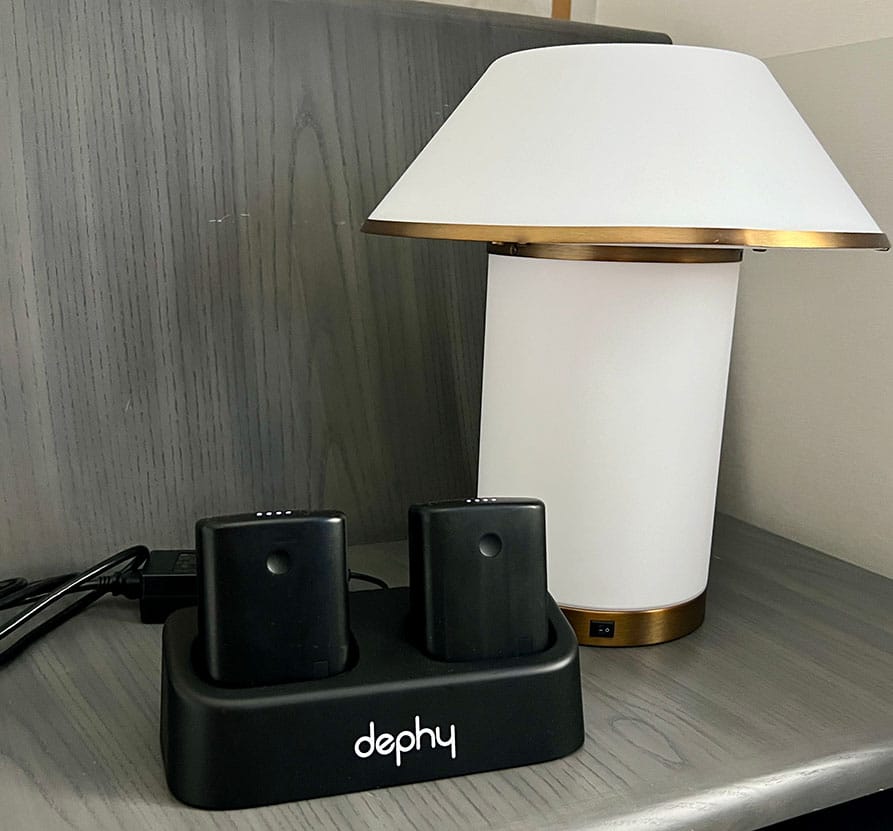
If the batteries run out, nothing bad happens. The actuator we developed is unidirectional, so with a depleted battery, or no battery at all, the Sidekick won’t resist your movement. You just walk normally. The batteries are removable, so swapping in a fresh pair takes seconds and can be done with one hand.
What benefits can a typical customer reasonably expect, how much do results vary, and who would you advise against buying Sidekick today?
 Most people tell us the same thing: walking takes less out of them, and they can do more in a day without running out of gas. How much that shows up varies with how someone walks today. It isn’t a fixed number, and I’d be skeptical of anyone who gives you one.
Sidekick is a general wellness product for people who are already walking on their own and want more out of it. It isn’t a medical device or a substitute for clinical care, so it’s not the right starting point for someone with severe movement challenges or who can’t walk independently.
After-Sales Support and Closing Thoughts
After someone buys the Sidekick, what commitment are you making to them regarding repairs, replacement batteries and shoes, and long-term support?
We stand behind it after the sale. When you’re creating a new category, selling the product is only half the job. Supporting people as they build it into their lives matters just as much.
That starts before anyone buys. Potential customers can book a Fit Call with our team to understand how the Sidekick would work for them, and anyone can call a real person at Dephy in Massachusetts with questions. As the only American company currently shipping a powered consumer exoskeleton for walking, we’ve found that this kind of access is a huge differentiator for us.
After the sale, every Sidekick comes with a 30-day return window, so people have real time to see how it fits into their lives. It’s also covered by a one-year warranty against defects in materials and workmanship. That includes the device itself, the batteries, the charger, and the straps and pads that hold it in place. Shoes wear out with use like any footwear, so they aren’t covered, but replacement shoes and batteries are available directly from us whenever they’re needed. If something goes wrong, our team is a phone call away.
Buying a Sidekick isn’t a one-time transaction. We’re here for the long haul.
Anything else you would like to add?
Just that this isn’t a science experiment anymore. That was true for a long time, and it’s not true now. The technology’s out of the lab and on real people’s feet, and that’s the whole point.
For product details supplied by the manufacturer, visit the Dephy website. Additional coverage based on Exoskeleton Report’s experience with its Sidekick unit is planned separately.
Editorial Note and Product Disclosure
Purpose and attribution: This written interview is published for educational and informational purposes. The questions and answers below have not been rewritten; only web formatting, paragraph spacing, and list structure have been applied. Statements, figures, product claims, and assertions about testing or certification are those of the interviewee and Dephy, and have not been independently verified by Exoskeleton Report. Their inclusion does not constitute an endorsement or an independent safety or performance assessment.
Unit provided for evaluation: Dephy shipped a Sidekick unit to Exoskeleton Report. We plan to publish separate hands-on videos and articles featuring our own experiences, observations, and opinions. This interview should not be confused with independent editorial coverage.




Add Comment