


The exoskeleton and wearable robotics industry continues to innovate in its quest to improve on-foot mobility for the elderly, mountain hikers, and everyone in between. But who has the time to monitor all producer websites, social media, or tech journals just to stay up to date? Or taking the time to differentiate from science fiction, marketing hype, and my personal favorite, rehashing old stories as “new.” And for the few who do, wouldn’t it be nice to have a resource to double-check that you haven’t missed anything important for the week? Enter the Exoskeleton Report, a weekly newsletter, now more than 1.5 years in self-publication. I keep a web archive of it here, but for the best viewing experience, I recommend signing up to receive it in your inbox (it’s free). Subscribe to the newsletter.
Visual Archive for June 13, 2026:
Text Archive:
China’s Silver Economy Helps Draw RMB ¥1.8B+ (US$270M+) Into Exoskeletons as Everyday Mobility Technology
A curious analysis coming from China that tabulates investment in exoskeleton companies that can be lnked to maintaining/imporving mobility for the eldarly. The ExR article ads a translation key for the company names and historical background: Link to ExR
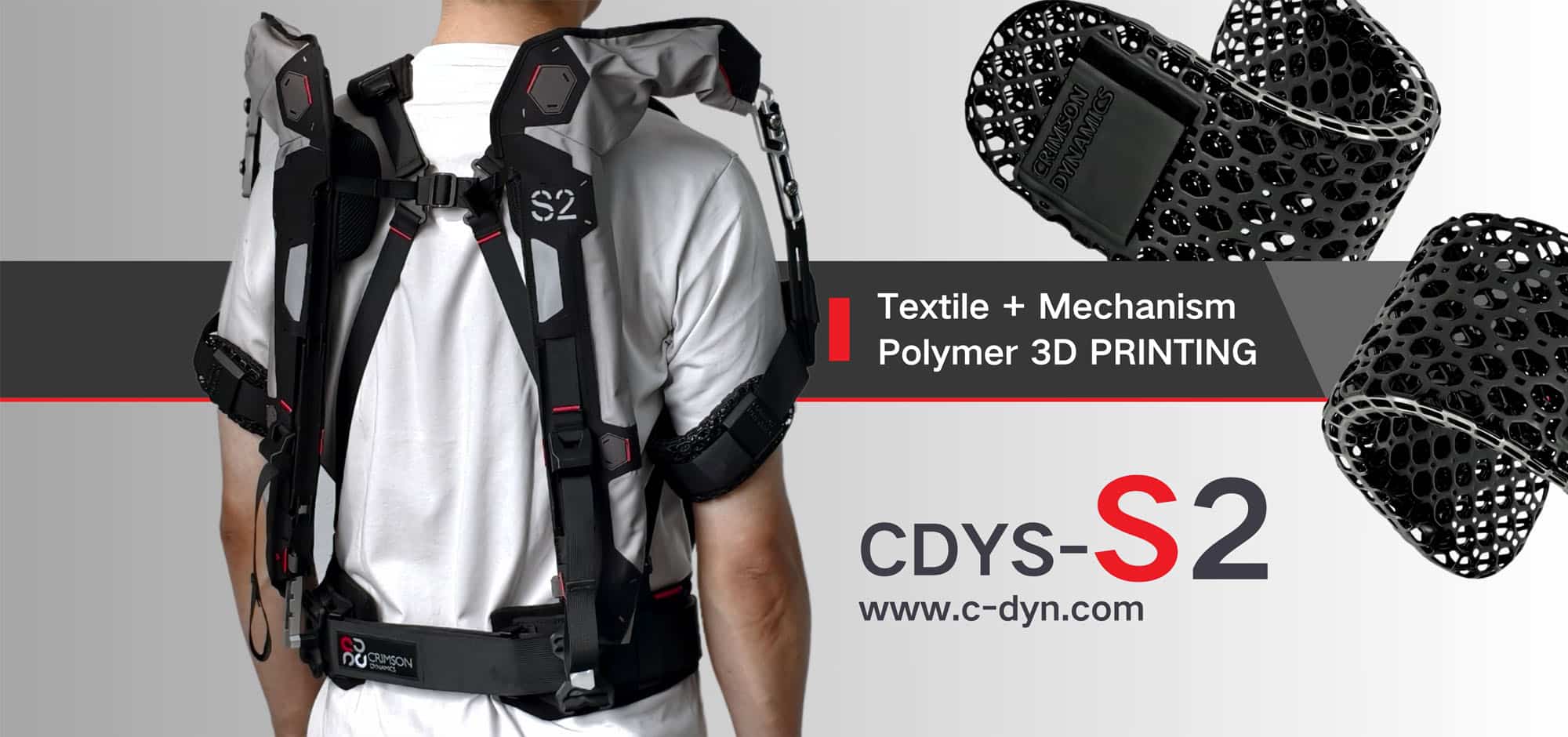
ExoIQ’s shoulder exoskeleton becomes hands-on exhibit at Deutsches Museum
ExoIQ reports that its powered shoulder exoskeleton S700 is used in the Deutsches Museum in Munich, including in robotics and health exhibitions, workshops, and robot shows where visitors can try it under guidance. link to article on ExoIQ
ProxiStep Wins First Place at CMSC Design for Rehabilitation Competition
Mehdi Mortazavi’s master’s thesis project, ProxiStep, won first place at the CMSC Design for Rehabilitation Competition, a student innovation challenge focused on assistive devices for people living with multiple sclerosis. Developed under the mentorship of Dr. Elham Morshedzadeh, ProxiStep is a soft lower-body exosuit designed to support individuals with asymmetrical proximal muscle weakness, helping improve gait balance and reduce the effort required to take a step. The device works by harvesting mechanical energy from the stronger side during walking and transferring it to the affected side to help propel the leg forward. Mehdi is continuing to develop ProxiStep and is seeking opportunities in industrial design, exoskeletons, assistive wearables, medical devices, and human-centered wearable product development.
Links: CMSC Design for Rehabilitation Competition | LinkedIn – Mehdi
Call for Research Articles: Journal of Rehabilitation Methods and Technologies
The Journal of Rehabilitation Methods and Technologies (JRMT) is inviting original research article submissions on innovations across the rehabilitation technology lifecycle, from early-stage methods and technical development to clinical translation and real-world impact. Topics include AI in rehabilitation, robotics, prosthetics and orthotics, assistive devices, neurostimulation, VR/AR, brain-machine interfaces, tele-rehabilitation, social robotics, and cognitive or speech rehabilitation technologies. Researchers, clinicians, engineers, technologists, rehabilitation scientists, and multidisciplinary teams are encouraged to submit articles of up to 8,000 words via Emerald Publishing’s ScholarOne submission system.
Link: Zen Koh – LinkedIn
Merging AI and human physiology to control wearable robotics | Aaron Young | TEDxWeber School Youth
Is this the future or exoskeletons? Task agnostic controllers for non-cyclical tasks, in-clothes integration and controller training using data beyond able-bodied users… – YouTube – TedxTalks Dr. Aaron Young is an Associate Professor and Woodruff and James R. and Sarah R. Borders Faculty Fellow in the Woodruff School of Mechanical Engineering at Georgia Tech and has directed the Exoskeleton and Prosthetic Intelligent Controls (EPIC) lab since 2016.
Measurement of Cognitive and Kinematic Adaptation in Exoskeleton-Assisted Locomotion: Validation of an XR-Based Framework
A new study in Sensors tested a mixed-reality framework for measuring how people adapt to walking with a lower-limb exoskeleton. Using XR visual tasks, eye tracking, and motion sensors, the researchers found that participants’ walking became smoother, more stable, and more consistent with practice, while the combined demands of walking and paying attention still required noticeable mental effort. This was a short 10-minute protocol + donning and doffing time.
AUXSYS and NATO MW COE Sign Cooperation Letter to Advance Exoskeleton Technology for Mountain Warfare
AUXSYS and the NATO Mountain Warfare Centre of Excellence signed a Letter of Cooperation on May 18, 2026, establishing a framework to explore how AUXSYS’ active exoskeleton technology could support mountain warfare operations. The collaboration will focus on future field experimentation in realistic conditions, assessing the system’s potential to reduce soldiers’ physical burden while improving mobility, endurance, and operational effectiveness in difficult terrain. AUXSYS, a NATO DIANA programme company, also highlighted plans to showcase its latest exoskeleton technology at Eurosatory 2026.
Links: Official press release | LinkedIn post
+ Jobs and upcomping events
Special thanks to all of our Patreon supporters! If you enjoy this publication, please consider joining their ranks!


Add Comment