

2026 Week #19 – Exoskeleton News – May 3 – May 9, 2026
Text version:
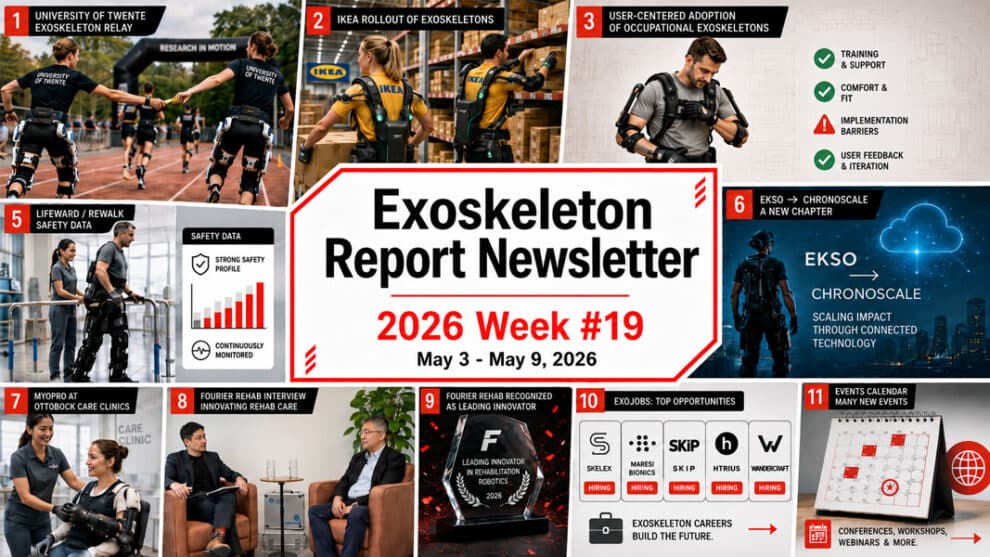
University of Twente researchers are showcasing how exoskeletons could transform mobility by helping people walk with less effort, greater stability, and more confidence, particularly those with walking impairments. Through a special Batavierenrace initiative on 8–9 May, staff from the university’s Biomechanical Engineering group will run relay stages while wearing different exoskeleton systems, from research prototypes to commercially available devices. As lighter and more affordable technologies enter the market, the team is also testing manufacturers’ claims by measuring energy use, stability, walking patterns, and user experience, with the broader goal of developing smart exoskeletons that support everyday movement and help people stay active in the future. – Link to full article on utwente.nl
SuitX by Ottobock reports that globally more than 130 IKEA units across 25 countries have deployed exoskeleton technology with six more IKEAs in Norway joining the list – LinkedIn
A new systematic review in the Journal of Occupational Rehabilitation highlights that occupational exoskeletons show promise for reducing physical strain at work, but successful adoption depends on much more than the device itself. Reviewing 28 studies, the authors found 70 facilitators and 67 barriers to workplace implementation, with common facilitators including perceived benefit, comfort, ease of use, safety, reduced fatigue, and injury prevention, while common barriers included limited mobility, cost, weight, discomfort, and poor job fit. Importantly, the review found that brief hands-on exposure can reduce perceived barriers, suggesting that training, familiarization, and worker involvement are essential for building trust and acceptance. The authors conclude that sustainable exoskeleton integration requires a user-centered approach that aligns device design, workplace needs, organizational support, and long-term evaluation. –Open Source – Springer
Lifeward Announces New ReWalk® Data Presented at ASIA 2026 – Lifeward presented new ReWalk Personal Exoskeleton safety data at the ASIA 2026 Annual Scientific Meeting, highlighting a longitudinal analysis of lower-extremity fracture prevalence during clinical use from 2013–2025. The company reports that only 3% of prescribed ReWalk devices globally have been associated with lower-extremity fractures since 2013, that incidence declined to 0.3% from 2020–2025, and that no fractures were reported among 97 German users tracked since 2018. Lifeward frames the findings as support for broader clinical confidence in powered exoskeleton-assisted walking for people with spinal cord injury when paired with appropriate training, technology improvements, and patient selection.
Applied Digital Completes Separation of Cloud Business, Establishing ChronoScale as Independent Public Company – Applied Digital completed its previously announced transaction contributing its cloud business to EKSO Bionics Holdings, Inc., after which EKSO changed its name to ChronoScale Corporation and began trading on Nasdaq under the ticker CHRN. Applied Digital says it received approximately 138 million ChronoScale shares, invested $15.75 million in cash, and owns about 97% of ChronoScale following the closing. For exoskeleton-industry watchers, the key detail is that the legacy EKSO business will continue operating as a wholly owned subsidiary of ChronoScale, while the public company’s broader focus shifts toward GPU-based cloud infrastructure for AI training, inference, and high-performance computing.
Myomo Announces Availability of MyoPro at Ottobock Care Clinics in the U.S. – Myomo announced expanded access to its MyoPro powered arm brace through Ottobock Care clinics across the United States, creating a broader clinical channel for people with upper-extremity impairment caused by stroke, brachial plexus injury, and other neurological conditions. Ottobock Care said the MyoPro complements its strategy of offering advanced neuro-robotic solutions in orthotics and prosthetics clinics, extending its mobility portfolio from lower-limb technologies such as the C-Brace to support for arm and hand paralysis.
From Hospital to Community: Assoc. Professor Loh Yong Joo on Singapore’s Evolution of Rehabilitation – Fourier Rehab
🎙️Episode highlights: 00:00 Assoc Professor Loh’s calling to rehabilitation 05:46Bridging the gap between hospital and community care 10:17 Setting realistic goals for meaningful recovery 14:59 Robotics, Tele-health, and the future of rehabilitation 22:03 Why better data builds smarter AI in healthcare 29:50 What’s next in rehabilitation research 34:50 Integrating TCM into modern rehabilitation practices 42:50 Building the future of rehabilitation across ASEAN
Fourier Rehab Named Global Leading Innovator in Rehabilitation Robotics 2026 – Singapore Business Awards
The award celebrates Fourier Rehab’s integrated rehabilitation ecosystem. Since its founding in 2015, Fourier Rehab has expanded to more than 10,000 installations across 64+ countries, strengthening its role as a trusted global provider of modern rehabilitation solutions.
Owen Teoh, Managing Director of Fourier Rehab International Division, shared that the recognition reaffirms the company’s belief in the power of robotics and AI to transform lives, while reinforcing its commitment to advancing rehabilitation technology for patients, clinicians, and healthcare systems worldwide.
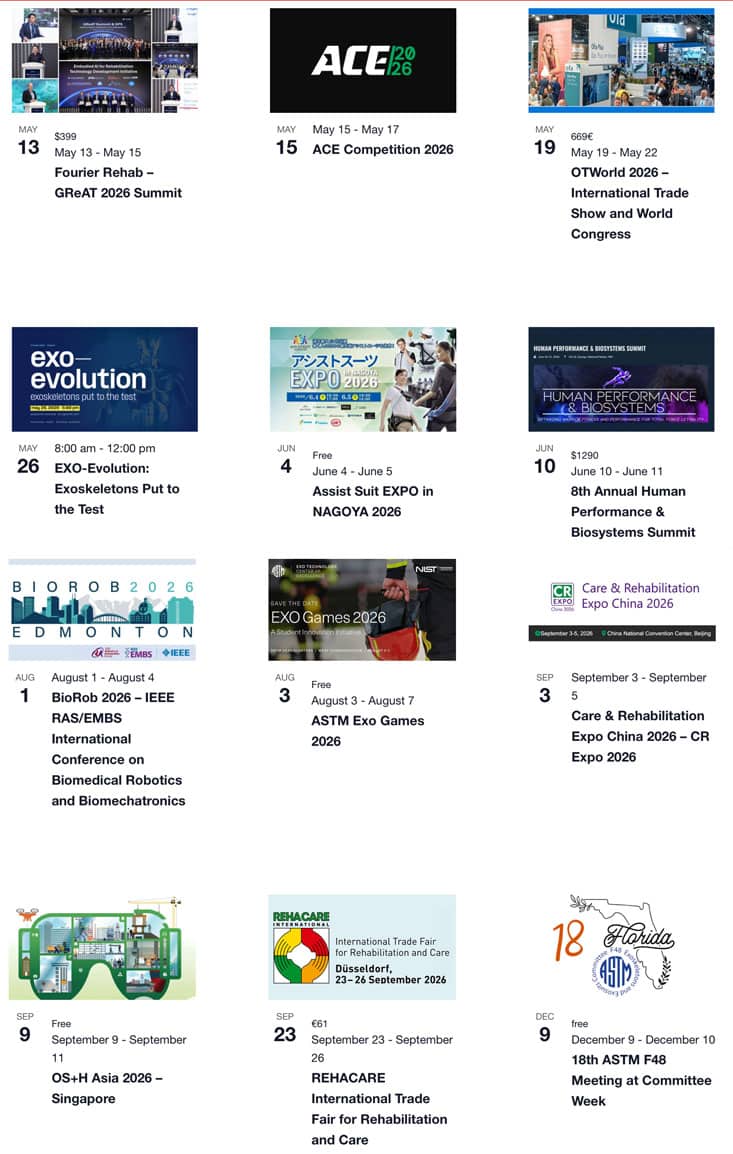
Plus job listing and quite a few upcoming events: event calendar
E-mail Version:



Add Comment