

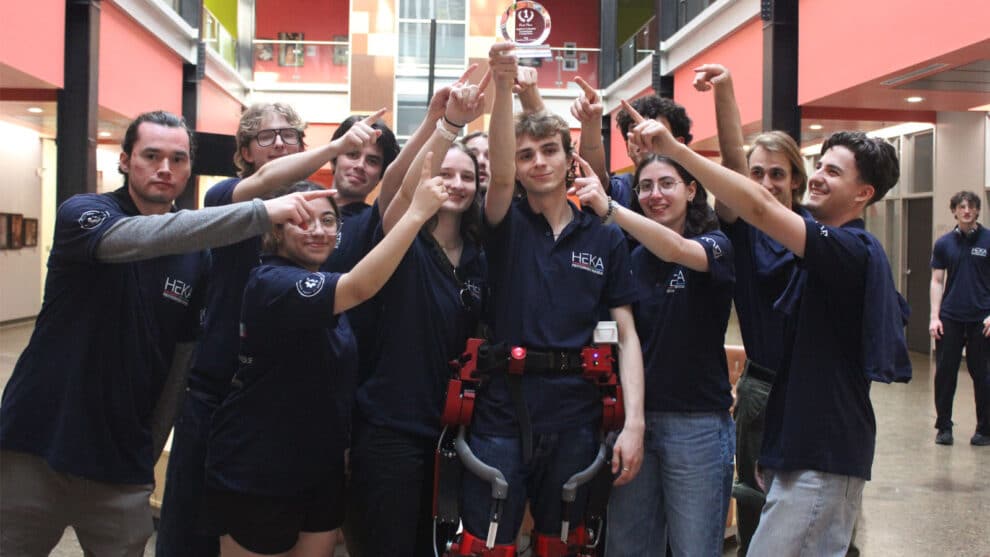
The team’s technical directors discuss design trade-offs, AI controls, safety, body fit, and the future of first-responder exoskeletons. This is the story of a student engineering team that spent three years developing a powered lower-limb exoskeleton for first responders, won an international competition, and then took the time to explain the design, AI, fit, safety, and organizational problems they had to overcome:
After winning first place at the ACE 2026 competition, three of PODI’s four technical directors — Mathis Ors (Electrical), Louis-Charles Patry (Software), and Rémi Chayer (Mechanical, co-directed with Marianne Beaudoin) — sat down to share their perspectives on the team’s journey, the challenges of building a powered exoskeleton, and where they see the technology heading.
Meet the Team
Mathis Ors
Role: Electrical Director
Time on the project: 3 years
PODI in a nutshell: PODI is a community of engineering students who work together on a common project during their limited free time. For the last three years, we have been working on a lower-limb exoskeleton for first responders that competes in international competitions.
Rémi Chayer
Role: Mechanical Director
Time on the project: 3 years
PODI in a nutshell: PODI is a project powered by students from various engineering and technical backgrounds who share their experience, knowledge, and skills to improve each other’s education and skill set. Through collaborative engagement, the final product of their work can be seen in the form of the PODI exoskeleton.
Louis-Charles Patry
Role: Software Director
Time on the project: 2 years
Marianne Beaudoin
The ACE Competition
For someone who has never heard of ACE, how would you describe the competition?
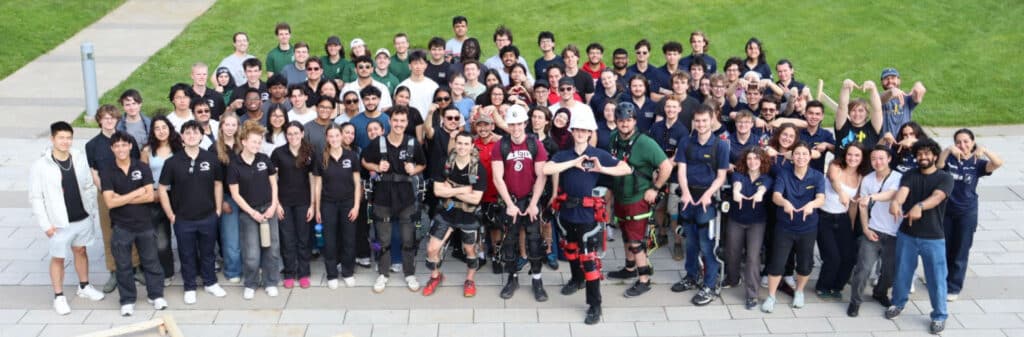
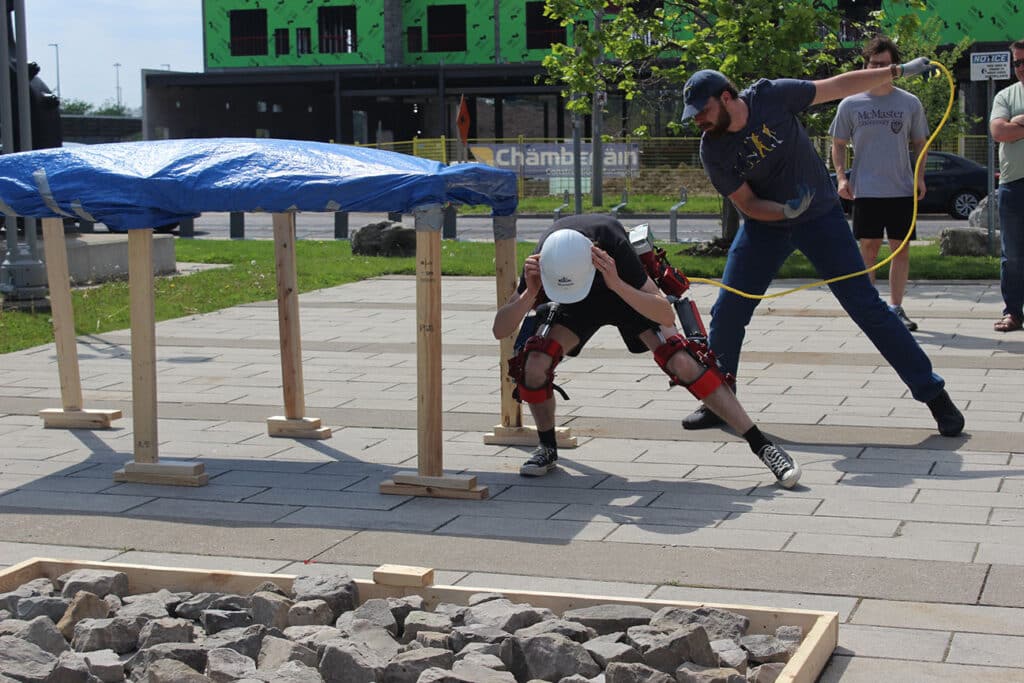
Mathis Ors: ACE is a student-led, force-augmenting exoskeleton competition. It’s a unique opportunity to try out exoskeleton design in multiple challenges. Teams from all over North America have one year to create and build a lower-limb exoskeleton. During ACE, the exoskeletons are tested qualitatively in a design review and a judge piloting test, then quantitatively in a strength challenge, metabolic challenge, and donning/doffing time.
What makes ACE unique or challenging?
Mathis Ors: ACE is unique in being the only student-led exoskeleton competition in North America. They also allow an impressive range of designs, from soft to hard exoskeletons and active or passive actuation. The most challenging aspect of ACE is the quality of the exoskeletons participating; every year they are improved, and every team is working hard to bring new designs and technological innovation.
What were your favorite moments from this year’s competition?
Rémi Chayer: Apart from the closing ceremony where we won first place, the obstacle course was a personal favorite. The whole team cheering on Mathis as he passed every obstacle with ease was exhilarating. The whole team built the exoskeleton, and now it was showing them that their hard work paid off (which can also be said for the closing ceremony).
PODI has steadily climbed the rankings at ACE over the past few years, culminating in a first-place finish this year. What does this year’s result represent to you and the team?
Louis-Charles Patry: This represents a great deal for us. It is the reward of all the hard work, the late nights, and the sacrifices we put into this project. But more than a trophy, it is a validation that our approach- staying consistent, communicating well, and keeping the team motivated- was the right one all along. And honestly, this result only motivates us to come back stronger, refine our routine, and make sure we remain among the top contenders in the years to come. First place is meaningful, but what drives us is the standard we want to hold ourselves to going forward.
Building PODI
How does PODI organize itself to build such a complex system?
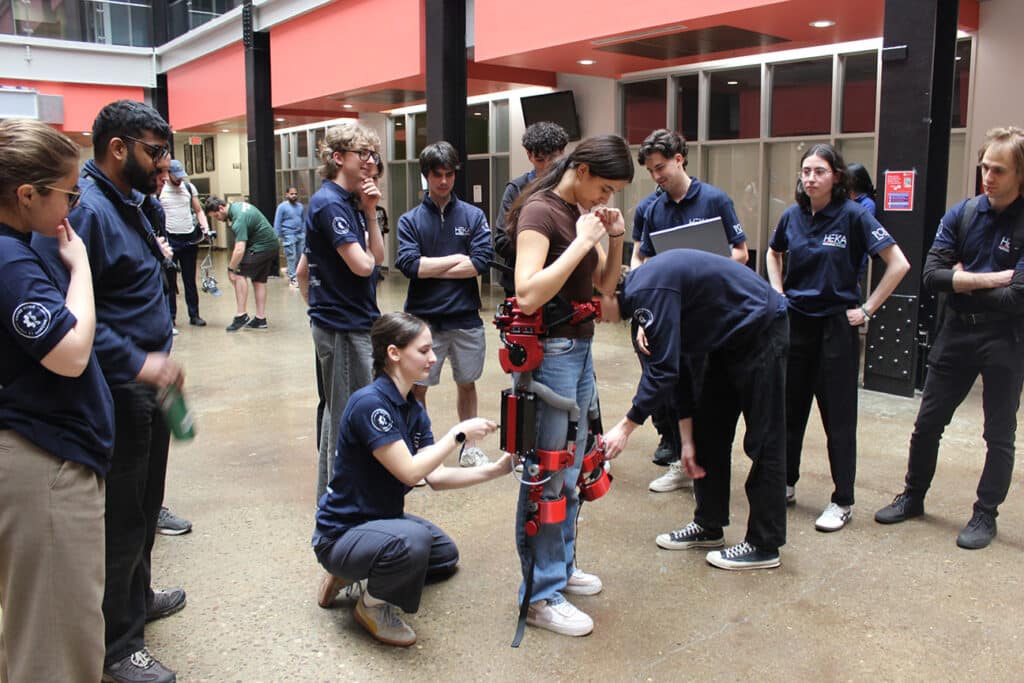
Rémi Chayer: We are organized in teams specialized in a certain engineering domain: mechanical, electrical, and software engineering (although students from every program can join whichever team they are the most interested in). Each team has one or two directors who coordinate with each other and with the administration of the student club (HEKA). The teams themselves are usually made up of sub-teams focusing on a specific issue or section of the exoskeleton. Each week, all teams gather in their respective meetings to share their work and help each other find solutions to present technical or design problems. The directors also take this opportunity to verify current progress and give feedback to improve the members’ work.
What were some of the biggest technical or organizational challenges?
Louis-Charles Patry: On the organizational side, one of our main challenges was making sure we were not finishing the mechanical side of the exo at the last minute. In previous years, that left the electrical team with very little time to do their work properly, so this year we made a conscious effort to plan better and hand things off earlier. On the technical side, finding the right strategy for the AI model was a real puzzle. We did not have a fully dedicated pilot throughout the process, and we were also unsure whether the model had any preferences for certain body types, which made calibration and decision-making a lot harder than expected. And then, a week before the competition, our pilot got sick, which could have seriously affected our performance. But everyone stepped up, pushed through it, and we were still able to deliver a strong performance.
Rémi Chayer: On the technical side of the mechanical section, the biggest challenge was to find the correct configuration of attachments and mechanical interfaces with the user’s body to allow near-perfect movement following without being uncomfortable. This is due to our current lack of tools such as design software, especially for human mechanics, and is also reinforced by the need to fit a wide range of human sizes and morphologies.
How do you approach safety when developing and testing the exoskeleton?
Mathis Ors: We approach safety as a design requirement rather than treating it as a final checklist. Early in the development, we identify risks and rate them on their likelihood of occurrence and their severity. We then work to eliminate risks, or we find ways to mitigate them using fail-safe mechanisms. To do that, the ASTM standards for exoskeletons and the ACE safety requirements provide a useful framework for risk management and testing procedures.
Team & Experience
What have you learned from being part of PODI?
Louis-Charles Patry: What we’ve learned from being part of PODI is that consistency and communication are everything. As mentioned earlier, PODI has been able to climb steadily to the top, and that didn’t happen by accident. Every week, we tried to hold work sessions, but without putting too much pressure on anyone. The idea was to plan, especially around exam periods, and to always have a plan B, a plan C, ready to go. That way, we were minimizing the chances of getting caught off guard by something unexpected. Communication was what tied the whole strategy together. It gave us the insights we needed to make the best out of every situation, no matter what came up. And beyond all that, we always kept the vibe light and fun. At the end of the day, the goal was to make the project something people enjoyed being part of, so that everyone could thrive doing something they’re passionate about.
What are you most proud of?
Rémi Chayer: That although we have suffered through short or even sleepless nights, we managed to pull through and deliver this year’s exoskeleton. I also believe the new team, which will direct the PODI project next year, will do a better job than we did this year, as they have learned from our mistakes.
Future of Exoskeletons
Where do you see powered exoskeleton technology heading in the next few years?
Rémi Chayer: We hope to see more in-field and specialized applications similar to firefighter exoskeletons where each unit would need to be tailored to the user, although the first commercial models will probably remain very generic. Next steps, hardware-wise, will probably converge toward lighter yet resistant materials such as composites or engineering plastics like PEEK. The goal of an exoskeleton is to replicate the anatomical movements of the user, so improved mechanisms for body adjustment and movement replication should be a goal to achieve.
What role do student teams play in the future of this field?
Louis-Charles Patry: Student teams bring something hard to replicate elsewhere: a willingness to experiment and push boundaries without the constraints that often come with more established research environments. There is a certain freedom in approaching a problem with fresh eyes, and that creativity can lead to ideas and solutions that others might not have considered. In that sense, we see student teams as a stepping stone. The concepts explored at the competition level can inspire researchers and organizations with greater resources to take those ideas further and turn them into something with real-world impact. We are not claiming to have all the answers, but we like to think that the work done at our level plants seeds that others can grow.
Rémi Chayer: To add to Louis-Charles’s last point, the students who have participated in a student team can also have an impact on the field by joining these research teams and organizations and then influencing the development of the field.
Future of ACE
Would you like to see more teams participating in ACE?
Louis-Charles Patry: Absolutely. More teams mean more diversity, more creative strategies, and ultimately a richer competition for everyone involved. Each team brings its own perspective on how to tackle the technical and organizational challenges of building an exoskeleton, and that variety is what pushes the field forward. Newer teams also tend to have the most disruptive designs, trying things no team has tried before. Beyond the competition itself, a larger field means more insights, more peer feedback, and more visibility for exoskeletons. We think that kind of growth benefits everyone, not just the teams competing, but the broader research community as well.
What changes or improvements would you like to see in the competition?
Rémi Chayer: A set of challenges that test the exoskeletons in common firefighter situations, similar to the obstacle course, but not only focused on movements. Also, maybe a modification to the donning/doffing tests where a firefighter suit must also be put on to test the exoskeletons’ compatibility with standard equipment. In that regard, independent wearers could help differentiate between the performance of the team’s own pilots and the exoskeletons.
Would STEM education kits make it easier for new teams to get involved?
Rémi Chayer: It probably would, but they would probably be quite expensive, only because of the motors (if any). The kits could, however, be focused on passive actuation (springs and elastics, for example), which would still give a good impression of how the exo must adapt to the human body and how to integrate the multiple subsystems, especially with standard parts, into the mix.
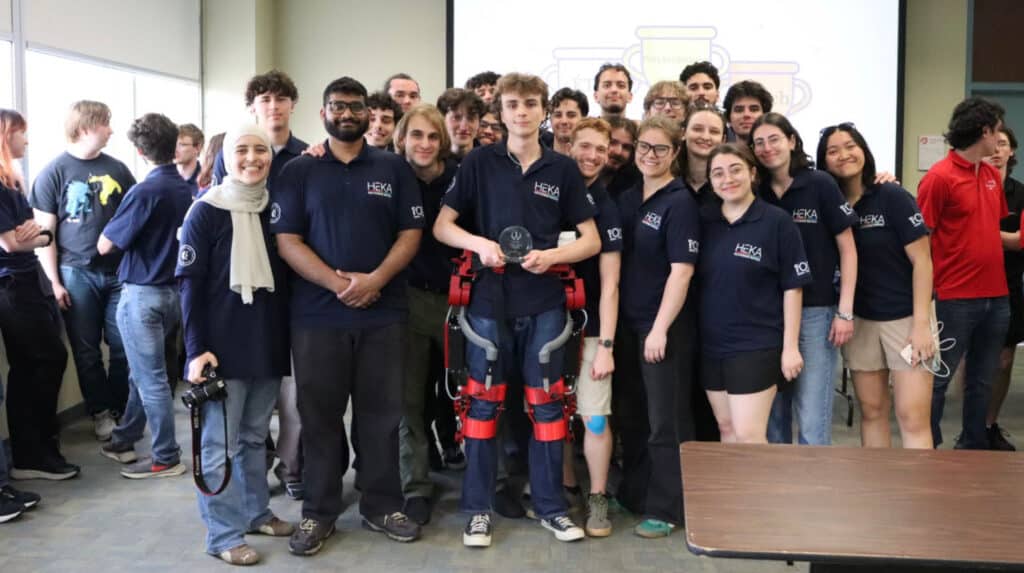
Featured image: PODI wins the 2026 ACE Competition, Courtesy of: HEKA / Polytechnique Montréal
Submitted by Mariam Abou Taam (LinkedIn), VP Competitions (2025-2026), HEKA / Polytechnique Montréal
Add Comment