

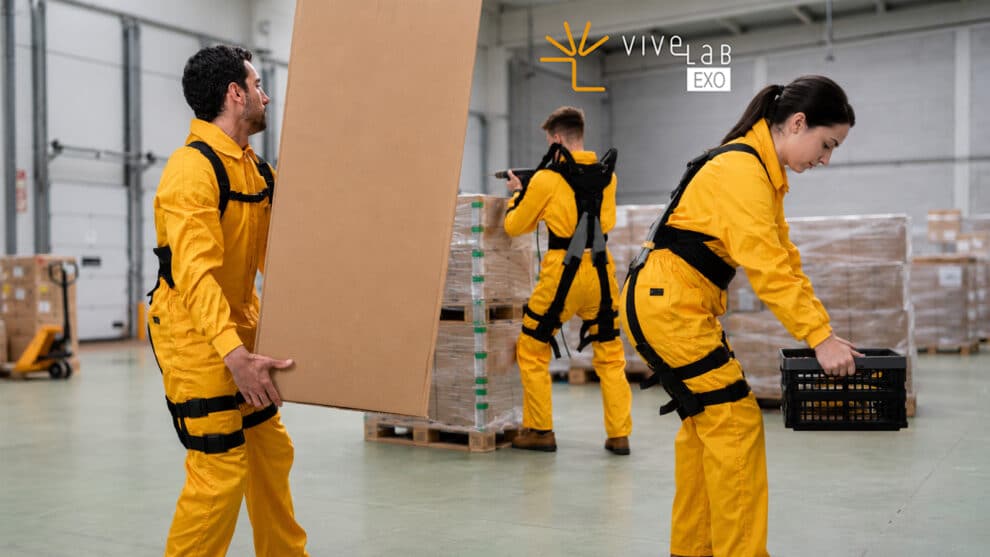
How a digital ergonomics platform combines motion capture, biomechanical modeling, and the TIE framework to objectively measure the real impact of wearable assistive technologies in the workplace.
What might be the biggest barrier to widespread industrial exoskeleton adoption?
In recent years, industrial exoskeletons have moved from experimental prototypes to practical tools that can support workers in physically demanding environments. Yet one of the biggest barriers to widespread adoption has remained the same: companies need reliable, objective evidence that exoskeletons truly reduce physical workload and improve ergonomic conditions.
A group of companies formed a consortium to address this challenge
 Back in 2023, a group of companies formed a consortium and decided to address the industrial exoskeleton adoption challenges.
- The development was led by ViVeTech, a Budapest-based industrial ergonomics software development company.
- GOGOA, from Bilbao in Spain, an industrial and medical exoskeletons OEM, was providing exoskeleton technologies inside, and the requirements were also the voice of the customer.
- Also from Spain, CTAG (Automotive Institute of Galicia), Vigo, was doing the testing and validation of the software performance.
- And finally, Farel from Çerkezköy / Tekirdağ, Turkey – an industrial manufacturer of plastics components was the industrial test site.
At the end of 2024, the consortium got financing from the EIT Manufacturing, and the work on the VIVELAB-EXO started.
Combining biomechanical analysis, motion capture technology, and digital data processing into a single platform – was that a good starting point?
 From the design desk, VIVELAB-EXO was created to close the gap between the exoskeleton’s OEMs and their industrial customers. By combining biomechanical analysis, motion capture technology, and digital data processing into a single platform, a solution that allows companies to evaluate exoskeleton performance in real industrial tasks was developed.
The origins of industrial exoskeleton adoption challenges are coming from the rapid growth of industrial exoskeleton technologies and the parallel increase in interest from the manufacturing, logistics, and construction sectors. As these wearable devices began appearing in workplaces, organizations quickly realized that purchasing decisions were often based on limited data. Many companies relied on short trial periods, worker impressions, or isolated case studies when evaluating whether an exoskeleton would bring measurable benefits. While such experiences were valuable, they rarely provided the quantitative evidence needed for long-term investment decisions or large-scale deployment.
The development team behind ViveLab Exo recognized that this lack of standardized evaluation methods was slowing the adoption of otherwise promising technology. The project, therefore, set out to create a digital platform capable of objectively measuring how exoskeletons affect human workload, posture, and energy expenditure during real tasks. The goal was not simply to demonstrate that exoskeletons can help workers, but to provide measurable, comparable, and scientifically grounded data that decision makers could rely on.
Does it always keep the data at the core?
At its core, ViveLab Exo is a data-driven ergonomic assessment platform. It captures information about workplace activities, analyses the biomechanical demands of those tasks, and compares the results with a database of available exoskeleton solutions. The platform integrates structured job analysis protocols, motion capture data, ergonomic models, and automated reporting tools to produce standardized assessments. By combining these elements into a unified workflow, the system bridges the gap between academic research, industrial ergonomics, and commercial decision-making.
 How does the platform work?
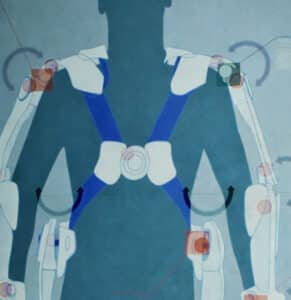
The platform is designed to follow the full lifecycle of an exoskeleton evaluation project. Companies or distributors begin by describing the work environment and the specific task that may benefit from assistance. This includes information about movement patterns, repetition rates, loads, and environmental conditions. Motion capture data and optional video recordings can be added to provide detailed measurements of human movement. The collected data is then processed using biomechanical algorithms and ergonomic standards, allowing the platform to estimate joint loading, posture risks, and potential areas where exoskeleton support could reduce strain.
What is the Torque–Intensity–Energy (TIE) model?
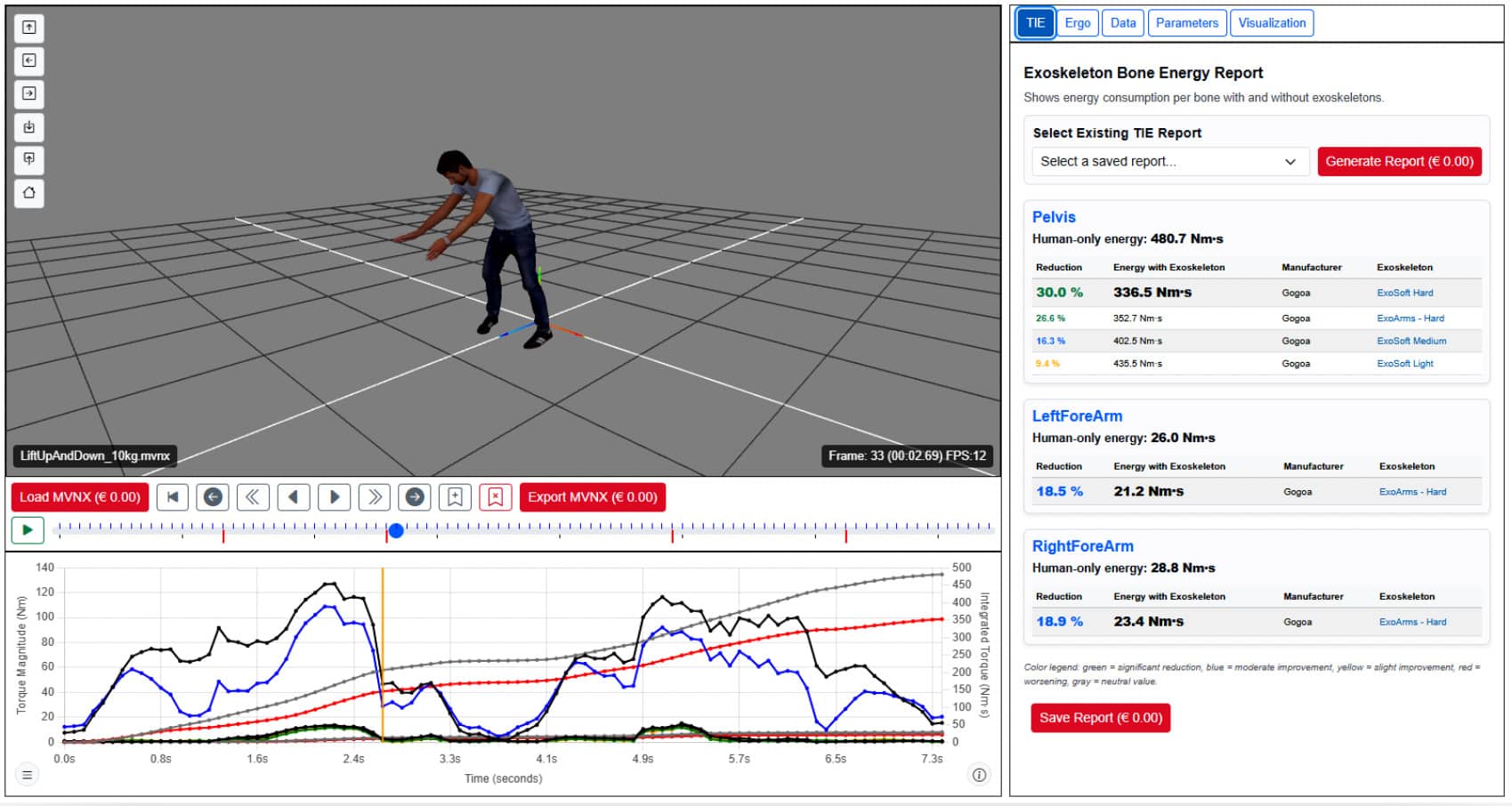
One of the most innovative aspects of ViveLab Exo is the integration of the Torque–Intensity–Energy model, commonly referred to as the TIE model. This framework establishes a direct link between the mechanical load experienced by the human body and the metabolic energy required to perform a task. By analyzing joint torques during movement, the system can estimate how much physical effort the human body must produce and how much of that effort can be absorbed by an exoskeleton.
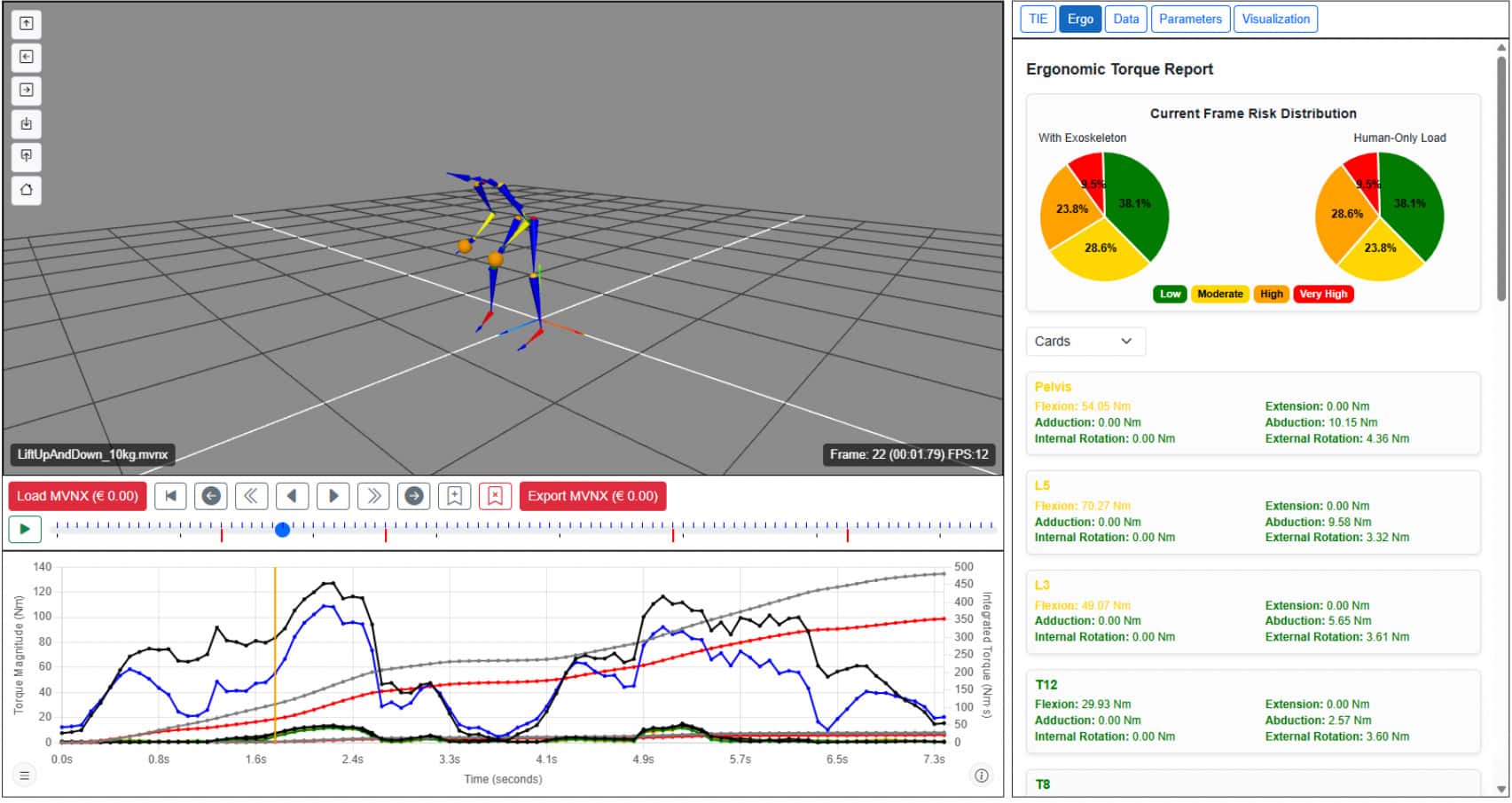
The significance of this model lies in its ability to translate biomechanical measurements into meaningful ergonomic indicators. When an exoskeleton takes over part of the joint torque required for a task, the human body generates less muscular force and therefore consumes less metabolic energy. This relationship allows the platform to quantify the ergonomic benefit of assistive devices using measurable physical parameters rather than subjective impressions.
Recent study shows minimal effect of the exoskeletons on the worker’s posture
A recent study shows minimal effect of the exoskeletons on the workers’ posture correction tool. That highlight that exoskeletons function as a biomechanical offloading tool and supports the approach taken by ViveLab Exo.
Was it tested?
The scientific validity of the approach has been tested through experimental comparisons between mechanical analysis and physiological measurements. In validation studies conducted with motion capture systems and metabolic monitoring, the predicted reduction in mechanical load showed a strong correlation with the measured decrease in human energy expenditure. Independent verification confirmed that changes in integrated joint torque correspond consistently with reductions in metabolic energy demand during exoskeleton assisted tasks.
Cloud-based, easy to understand, quick to present the results
From a practical perspective, the ViveLab Exo platform is built as a cloud-based system designed for collaboration between exoskeleton distributors and industrial users. Distributors can analyze multiple customers and workplaces, while companies can document their operations and generate standardized reports. Each evaluation results in a detailed report that describes the task, summarizes the ergonomic analysis, and identifies the type of exoskeleton that may provide the most effective support.
Beyond individual assessments, the broader vision behind the platform is to accelerate the adoption of wearable assistive technologies across industry. By providing objective and repeatable evaluation methods, ViveLab Exo helps reduce uncertainty for companies considering exoskeleton investments. Safety managers gain a tool for understanding how assistive devices influence workplace risk, while manufacturers and distributors gain a standardized method for demonstrating the effectiveness of their products.
Is VIVELAB-EXO looking further and beyond?
VIVELAB-EXO has also foreseen the need of consistent industrial database for humanoid robots machine learning. By collecting systematically visual assessments data, motion capture data and videos for the industrial manufacturing processes the platform would be able to develop a relevant database adding value in the humanoid robotics value chain.
Let’s move the conversation to measurable evidence
Ultimately, ViveLab Exo represents an effort to move the conversation about exoskeletons from anecdotal experiences to measurable evidence. As wearable robotics continue to evolve, the availability of reliable evaluation platforms will play a critical role in determining how widely these technologies are deployed. By combining digital ergonomics, motion analysis, and quantitative biomechanical modelling, ViveLab Exo aims to provide the data driven foundation needed for the next phase of industrial exoskeleton adoption.



Add Comment