

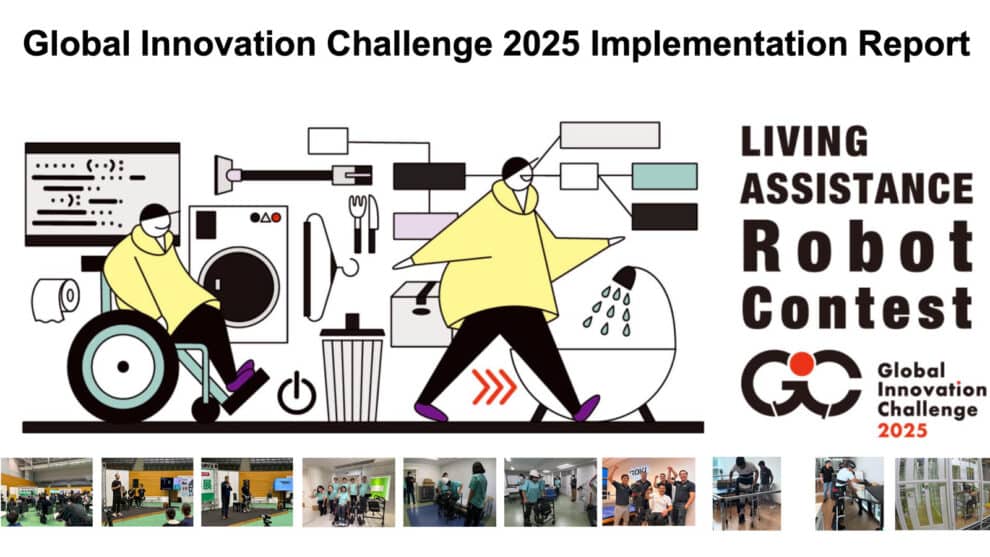
The Global Innovation Challenge (GIC) is designed to push assistive robotics out of the lab and prototype stage and toward real-world independence: specifically, enabling wheelchair users with lower-limb paralysis to perform everyday tasks by leveraging remaining physical function, without caregiver assistance.
What GIC2025 tested:
In the 2025 edition, teams were evaluated across seven daily-life tasks (toileting, preparation, meal, laundry, package receiving, cleaning, bathing), with task-based awards and additional “achievement” prizes. To make participation more accessible, especially for international teams, GIC2025 allowed the Practical Evaluation of the competition to be conducted either at the Tsukuba Innovation Center (Japan) or at team-prepared local venues.
Results:
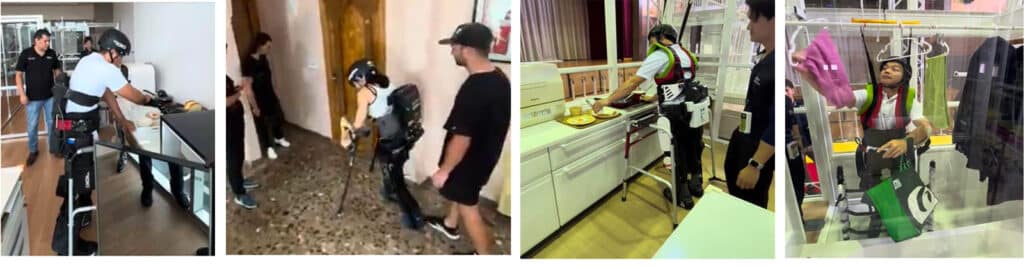
Four teams entered GIC2025: ROKI Robotics, FREE Bionics Japan, Team WPAL, and TWIICE (all of them veterans in the exoskeleton industry). ROKI Robotics is best known for its walking assist powered exoskeletons in Mexico, FREE Bionics has been developing mobility exoskeletons since 2017, WPAL is the long-running Japanese program behind the WPAL wearable power-assist locomotor platform, and TWIICE is the Swiss spin-out recognized for its lightweight lower-limb exoskeleton approach developed alongside people with spinal cord injury (with a well-documented snow version).
The Practical Evaluation was completed safely with no incidents, and the task results showed meaningful progress, especially in core mobility-related activities such as preparation, meal preparation, and laundry.
Notable achievements from the results summary include:
- ROKI Robotics achieved Task 1 (Toilet), Task 2 (Preparation), and Task 4 (Laundry), and was awarded the Judges’ Special Award
- FREE Bionics Japan achieved Task 2 (Preparation), Task 3 (Meal), and Task 4 (Laundry).
- TWIICE achieved Task 2 (Preparation).
- Team WPAL achieved Task 2 (Preparation).
If you are interested in medical exoskeletons (and similar tech) for walking assistance, watching the competition videos would be highly valuable, as this is where “the rubber meets the road.” In other words, this is not about what the designers “hoped” their devices would do; this is about what they “can” do to amplify the residual mobility left in the users that they are paired with. (The videos are on the GIC website.)
Results Presentation Meeting:
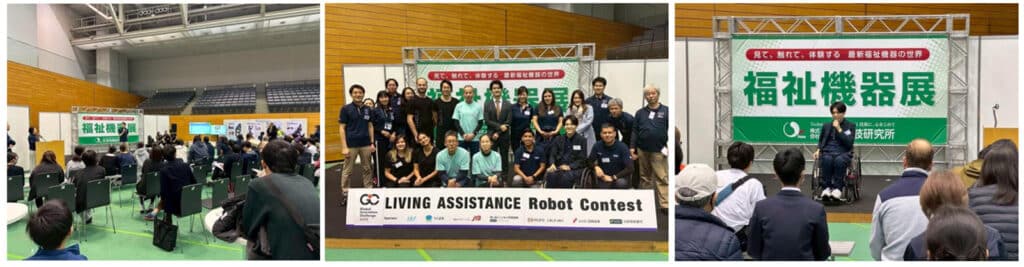
GIC2025 culminated in a Results Presentation Meeting on November 22, 2025, including robot exhibitions, team presentations, and live demonstrations (e.g., donning, sit/stand, walking, step climbing, and object pickup by ROKI Robotics).
Call to action: watch the evaluation videos + learn more
If you want the clearest, most “real-world” view of how these systems performed, GIC has published Practical Evaluation videos for each team on its official site.
- Global Innovation Challenge (main site): https://global-innovation-challenge.com/en/
- GIC2025 page (includes Practical Evaluation videos): https://global-innovation-challenge.com/en/event_and_project/2025/GIC2025.html
A recurring competition built to get prototypes out of the lab faster:
The Global Innovation Challenge (GIC) isn’t a one-off event; it’s a recurring competition that runs in editions (starting with GIC2021), building continuity year to year around the same core mission: advancing mobility-assist technologies for people with lower-limb paralysis.
What makes GIC valuable is its purpose: to push promising devices, such as powered exoskeletons and other mobility systems, into structured, simulated real-world daily-life testing sooner, rather than remaining stuck in research cycles without practical evaluation. The competition explicitly evaluates solutions against everyday tasks (toilet, washing up, meals, laundry, package receiving, cleaning, bathing), creating a repeatable benchmark for “can this work in real life?” performance.




Add Comment