

As the exoskeleton and wearable robotics industry is growing (a good thing), it is becoming increasingly difficult to list all the major weekly events. The newsletter, in other words, is becoming rather long. An alternative form of communication could be video, where one can just play in the background while all the links and searchable information remain in written form.
As an experiment, last week’s newsletter comes with its own YouTube video that lists the news and explains why each item appears important and noteworthy. You can find both the video and the archive copy of the email newsletter and the text-only version that is Google Searchable below:
The video version (above) ended up being 22 minutes, which is longer than expected, even though I still felt that I was rushing to get through all the content. I guess there was just a lot that happened in the 3rd week of 2026!
Text Only Version:
Early Access for Main-Tier and Above Patreon Supporters
I got to see 20 exoskeleton and related technology producers at CES 2026, and Dr. Sugar and I sat down to discuss the experience. The Exoskeletons and Wearable Robotics podcast is only on episode 24, but I have decided to fast-track episode 30 and make it available to ExR Patreon supporters well ahead of time.
CYBERDYNE and Thailand’s Institute of Geriatric Medicine (IGM-DMS) Agree to Promote “Cybernics Medical and Healthcare Innovation” Across ASEAN
CYBERDYNE signed an MOU with Thailand’s Institute of Geriatric Medicine (IGM-DMS, Ministry of Public Health) to advance “Cybernics Medical and Healthcare Innovation” in Thailand, using technologies such as the HAL Lumbar Type to support mobility, healthy aging, and reduced caregiver burden. The partners plan clinical and workforce development in Thailand and aim to scale the model across other ASEAN countries facing similar demographic pressures. The initiative is being supported by Japan’s FY2025 Program for the International Deployment of Medical Technologies, administered by the Japan Institute for Health Security (JIHS).
Lifeward Enters Transformative Strategic Investment and Partnership Agreement with Oramed to Create a Diversified Biomedical Innovation Company
Lifeward (ReWalk/AlterG) announced a strategic partnership with Oramed that could give Lifeward access to up to ~$47 million in capital (a mix of equity, convertible notes, milestone-based funding, and warrants), aimed at supporting a path to cash-flow positive while funding selective new innovation. As part of the deal (subject to shareholder approval), Lifeward will integrate Oramed’s POD™ oral protein drug-delivery technology, while Oramed can acquire up to 49.99%ownership; Oramed will also manage and fund the planned POD™ clinical program, letting Lifeward stay focused on profitability while retaining upside exposure to the biotech platform.
FDA announces sweeping changes to oversight of wearables, AI-enabled devices
Conclusion: This makes it easier to argue that consumer exoskeletons for hiking can stay positioned as low-risk consumer wellness products—provided the claims are limited to wellness/fitness/general mobility/recreational support and the product avoids medical or rehabilitation claims.
Bottom line: A hiking-focused consumer exoskeleton can generally remain a low-risk wellness product if it’s marketed for fitness, general mobility, and recreational support—and not for diagnosing, treating, mitigating, or rehabilitating a medical condition.
Carbonhand continues its experiment with AI generated information podcast
New episode 5 on “Home-based rehabilitation using a robotic hand glove device leads to improvement in hand function in people with chronic spinal cord injury: a pilot study.”
Some encouraging coverage for Consumer & Industrial exoskeletons from CES 2026:
“Exoskeletons are shedding their bulky, sci-fi image to become lightweight, AI-powered consumer devices that manufacturers hope will become as commonplace as smartwatches, targeting everyone from hikers to seniors seeking to stay active. The metal contraptions are impossible to miss in the aisles of the CES consumer technology show in Las Vegas, with visitors eager to try out devices that, depending on the model, help to train the legs, support the knees, and strengthen the back.”
Another interesting article from CES 2026:
“The Age of the Wearable Exoskeleton Has Quietly Begun; It’s the fact that it doesn’t ask users to adopt a new identity. You’re not a patient. You’re not a worker in PPE. You’re just someone who wants a little extra endurance today.; If wearable exoskeletons ever become as common as smartwatches, they won’t start with giant robotic frames or dramatic transformations. They’ll start with devices like this: foldable, intelligent, optional.”
Reducing Traumatic Injuries On The High SeasUTA researcher leads project to protect Navy sailors operating high-speed boats
Analysis: What is old is new again, I guess 20KTS+ was simply too early?
How do we communicate device performance in a way that a buyer can make an apples-to-apples comparison? Not picking on GearJunkie, but the stated capabilities below for a powered hip exoskeleton seem unrealistic.
“This design combines a hip and knee exoskeleton that it claims delivers 35% more leg strength, 40% less knee joint wear, and a 30% drop in heart rate when doing activities like hiking.
The brand says that “with Ascentiz, walking becomes smooth and effortless. It gives you a natural lift when you move forward and steady support when you need balance.” The device has a battery range of up to 31 miles”
Introducing “Beyond The Skin” – A New Podcast on Human Augmentation
First episode is out on YouTube: How Far is Too Far? Bill and Matt discuss how far is too far in modifying the human body and when are you not human any more.
2025 IEEE Transactions on Control Systems Technology Outstanding Paper Award – A Modular Framework for Task-Agnostic, Energy Shaping Control of Lower Limb Exoskeletons
University of Michigan researchers won the 2025 IEEE Transactions on Control Systems Technology Outstanding Paper Award for their paper, “A Modular Framework for Task-Agnostic, Energy Shaping Control of Lower Limb Exoskeletons.” The team’s M-TOES control framework uses a data-driven optimization approach so an exoskeleton can provide smooth assistance without human-intent detection or task recognition, working naturally across walking, ramps, stairs, sitting, and standing; it was validated on the M-BLUE exoskeletonand is designed to generalize across different lower-limb joint configurations. The award was presented at the 2025 IEEE Conference on Decision and Control, recognizing authors Jianping Lin, Gray Thomas, Nikhil Divekar, Vamsi Krishna Peddinti, and Robert Gregg.
Notice on the Issuance of “Several Measures to Cultivate the Main Body of Elderly Care Service Business and Promote the Economic Development of Silver Hair”
AI Summary: China’s Ministry of Civil Affairs and seven other central agencies issued new policy measures (dated Dec. 25, 2025) to boost eldercare businesses and the “silver economy,” urging provinces to implement them. The plan calls for more age-friendly services and products, plus stronger brand building, supply-demand matchmaking platforms, and expanded expos/retail channels for senior-focused offerings. A key section pushes “tech-enabled” eldercare—promoting AI, smart monitoring, and explicitly exploring exoskeleton robots alongside rehab aids, service robots, and even brain–computer interface concepts. It also encourages real-world pilots and leasing/trial deployments of intelligent eldercare equipment in institutions to speed up product iteration and adoption. Finally, it signals upcoming work on standards and certification for senior products/services, which could shape procurement and create clearer requirements for companies selling into eldercare.
“This is not a ‘gadget from the future.’ This is technology that should work for energy workers now.” DroneUA brought the Hypershell exoskeleton to Ukraine, and predicts over 200,000 users of the device in the coming years
Analysis: An incredibly bullish outlook for walking-assist exoskeletons for workers in the power industry.
Plus jobs and events lists (see the embedded copy above).
Special thanks to our Paid Patreon Supporters:
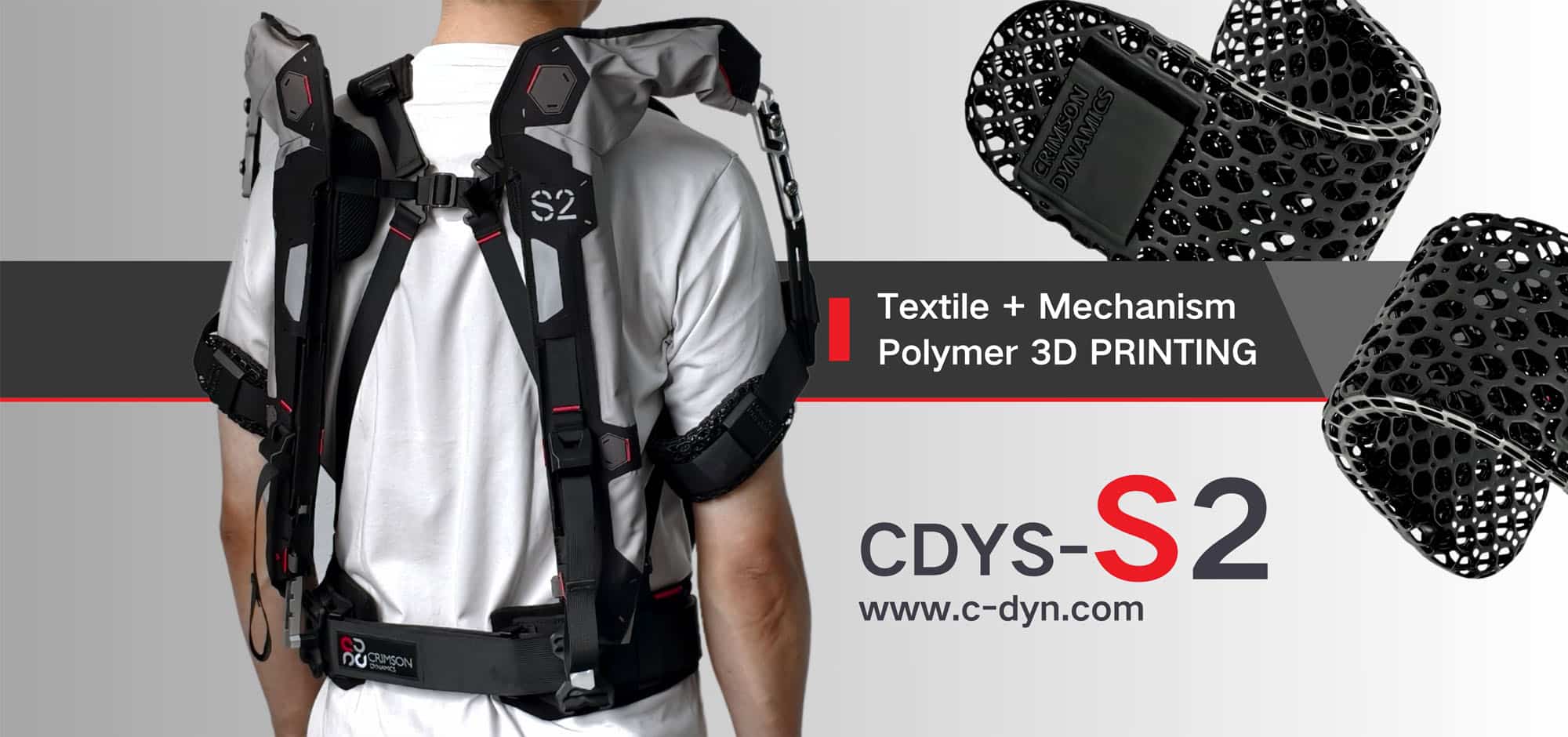
- Corporate Tier: Humotech, Auxivo, HeroWear, Digity, Hypershell, Proteso, Crimson Dynamics
- V.I.P: Volker Bartenbach, Rita Vazquez-Torres, MinMar
- Main Tier: SupperEssence, Karl Zelik, George Woodland, Stefano Toxiri, Sebastien Stassin, Diego Arbea




Add Comment